A ChatGPT ad click returns 89 cents. Search returns $2.45.
Two academics measured what a paid ChatGPT visit returns. It came to roughly a third of a search visit, at a price about 6.6 times what the return supports.
The short version
- A working paper from WU Vienna and Frankfurt School found a paid ChatGPT visit in the US returned $0.89. A paid Google search visit returned $2.45.
- The authors put the parity price at roughly $0.26 a click. The largest publicly known account pays $1.72, about 6.6 times that.
- The paper is unreviewed, last-click only, and one advertiser accounts for 66% of the paid ChatGPT purchases in it.
- Buy the channel as an option. Put the parity figure in the plan beside the rate card.
Most media plans we see now carry a ChatGPT line. Almost none carry a number beside it saying what a click on that line is worth.
Now there is a first number. Maximilian Kaiser of WU Vienna and Christian Schulze of Frankfurt School released a working paper in October, and PPC Land surfaced it on 2 November. It rests on 60 weeks of GA4 panel data to 22 August 2026, covering nearly 10 billion sessions: 1,898 websites in the organic panel, 387 of them with at least one paid ChatGPT click.
In the US, a paid ChatGPT visit returned $0.89. A paid Google search visit returned $2.45. Conversion ran at 0.37% against 1.17%.
What is a ChatGPT ad click actually worth?
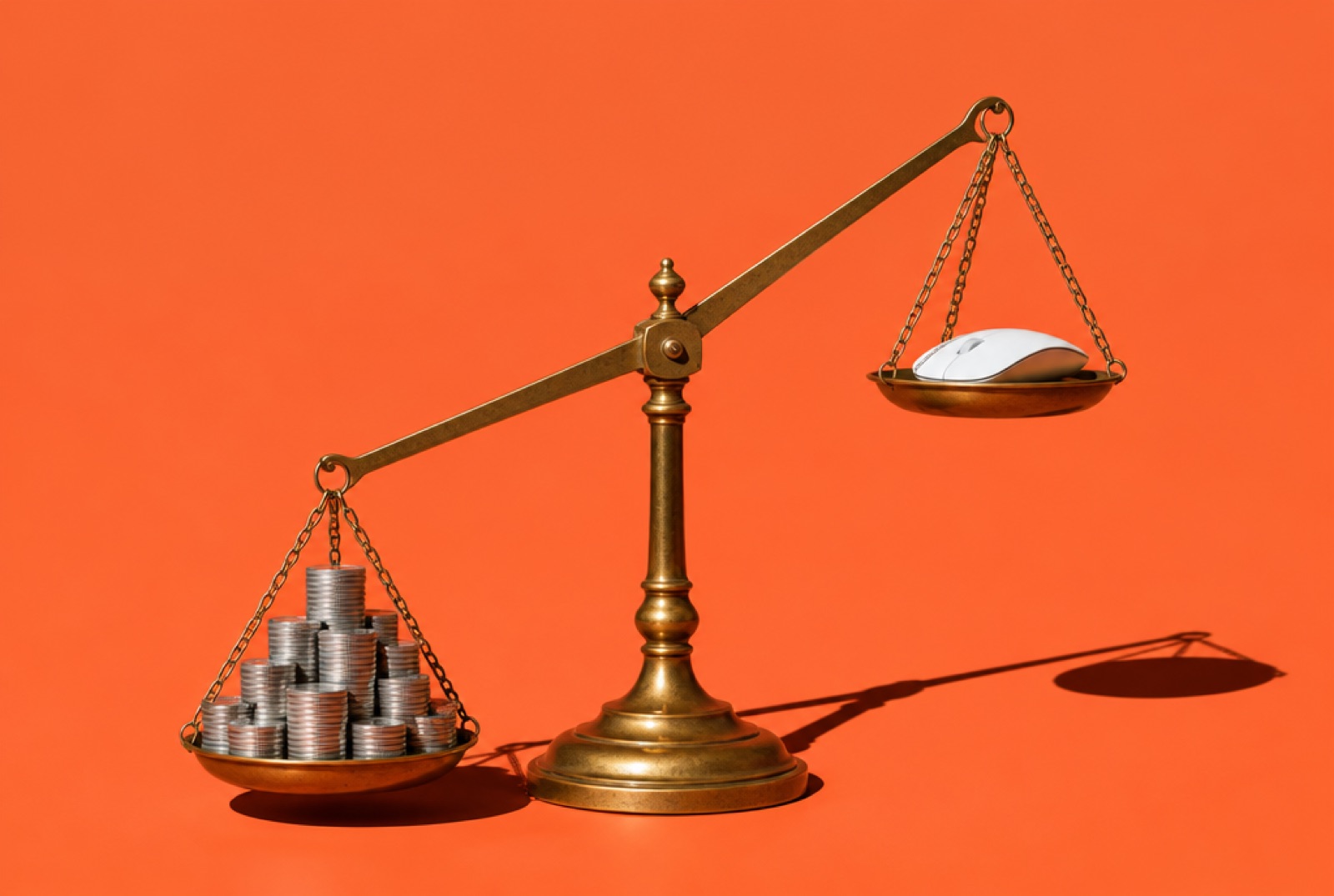
Roughly a third of a search click, on this evidence. That would be fine if it cost a third as much. It does not. Kaiser and Schulze compute a parity price of about $0.26 per click. The largest publicly known account is paying $1.72, which is 6.57 times parity.
So the price is being set by scarcity and narrative, and the return has not caught up with either.
A ChatGPT line item without a parity number is a rate card presented as a valuation.
Does that make ChatGPT a bad channel?
No. The same paper found organic ChatGPT sessions returned $3.27 each, the highest of the five channels it measured. The demand behind the channel is real. The ad product's price has simply not attached itself to that demand yet.
One more figure will get quoted, so handle it with care. Organic ChatGPT referrals fell 5.9% over the first 13 weeks after ads launched. The confidence interval runs from minus 12.6% to plus 1.2%, which includes no change at all. Do not build a slide on it.
How far should you trust this study?
As a first reading, with the limits kept in plain view. They are load-bearing.
This is an unreviewed working paper. The tracking is last-click only. One advertiser accounts for 66% of all paid ChatGPT purchases in the sample. Of the 387 sites with a paid click, 73 recorded no paid transaction at all. And the data provider previously employed one of the authors.
None of that makes it a verdict on ChatGPT ads. It is the first instrument with a causal design that anyone has pointed at the question. What it says is narrow: the price and the value have not met.
Can you trust the platform's own click numbers?
Not without your own count beside them. Digiday's Krystal Scanlon and Tim Peterson reported on 1 October that UK agency Accuracast found ChatGPT reporting roughly 100 clicks where its own count showed 20. OpenAI support could not explain the gap. The agency also watched lead forms arrive while the platform still showed zero conversions a fortnight later.
Keep that in proportion too. It is anecdote from a handful of named agencies, with no platform-level data. The same article has AdRoll and Jellyfish reporting no click discrepancies at all. OpenAI declined to comment, so one side of the story is unexamined. The pattern is real. Its size is unknown.
What should you put in the media plan?
Three things, before any money moves.
Buy the channel as an option. That is our position at the studio. A small, deliberate spend buys you learning and a seat while the product matures. A full line item buys you $0.89 of return at whatever the rate card says.
Put the parity figure beside the rate card. Write $0.26 next to the price you are quoted, with the paper's caveats attached. The gap between the two numbers is what you are paying for being early. Whoever signs the plan should see that spread and choose it on purpose.
Define the result before the test. Monica Shukla of Mile Marker said the useful thing in that Digiday report: set the measurement framework first, then go back to it, and do not take platform-first metrics at face value. Decide what counts as a click and a conversion in your own analytics. Hold that definition when the platform's number disagrees.
The demand is real and the price is a guess. Pay for the first. Make someone show their working on the second.
Questions people ask
What is a paid ChatGPT ad click worth compared with Google search?
About a third as much, on the first academic evidence. A working paper from WU Vienna and Frankfurt School found a paid ChatGPT visit in the US returned $0.89 against $2.45 for a paid Google search visit, with conversion at 0.37% versus 1.17%. The paper is unreviewed and uses last-click tracking only.
What is a fair price for a ChatGPT ad click?
The same working paper computes a parity price of roughly $0.26 per click. The largest publicly known account pays $1.72, about 6.6 times that figure.
Are ChatGPT ad click counts reliable?
Not consistently. Digiday reported on 1 October 2026 that UK agency Accuracast saw ChatGPT report roughly 100 clicks against its own count of 20, while AdRoll and Jellyfish reported no discrepancy in the same article. The evidence is anecdote from a handful of agencies, and OpenAI declined to comment.
Sources
- ChatGPT ad visits earn shops $0.89 against $2.45 for Google search ads, PPC Land, . Coverage of the Kaiser and Schulze working paper. Unreviewed, last-click tracking only.
- Christian Schulze, faculty page, Frankfurt School of Finance & Management, . Co-author of the working paper, released in October 2026.
- OpenAI's measurement gaps are keeping ChatGPT ads budgets at test level, Digiday, . Agency anecdote, no platform-level data. OpenAI declined to comment.
Finished work in two weeks, at a fixed price.
A sprint ships a messaging platform, a brand system or a campaign in fourteen days. You see the scope and the number before we start.
Keep reading
Amazon wrote 16 benchmark tips. None says spend less.
Amazon Ads explains how its benchmarks work and what to do about them. On PPC Land's count, not one of the 16 recommended actions tells you to spend less.
· 3 min read
Only 14% of buyers will pay for the difference you think you have.
Research by CEB, Google and Motista found buyers barely tell leading brands apart on business value, and only 14% would pay a premium for the difference. A launch built on features joins the 86%.
· 3 min read