72% say ABM pays better. Only 17% have built it properly.
Momentum ITSMA asked 279 ABM leaders how it was going. Most said the returns beat other marketing. Fewer than one in five had built ABM into how the company goes to market.
The short version
- In Momentum ITSMA's benchmark of 279 ABM leaders, 72% said ABM delivers higher ROI than other marketing.
- Only 17% of programmes were fully embedded as a foundation of go-to-market strategy.
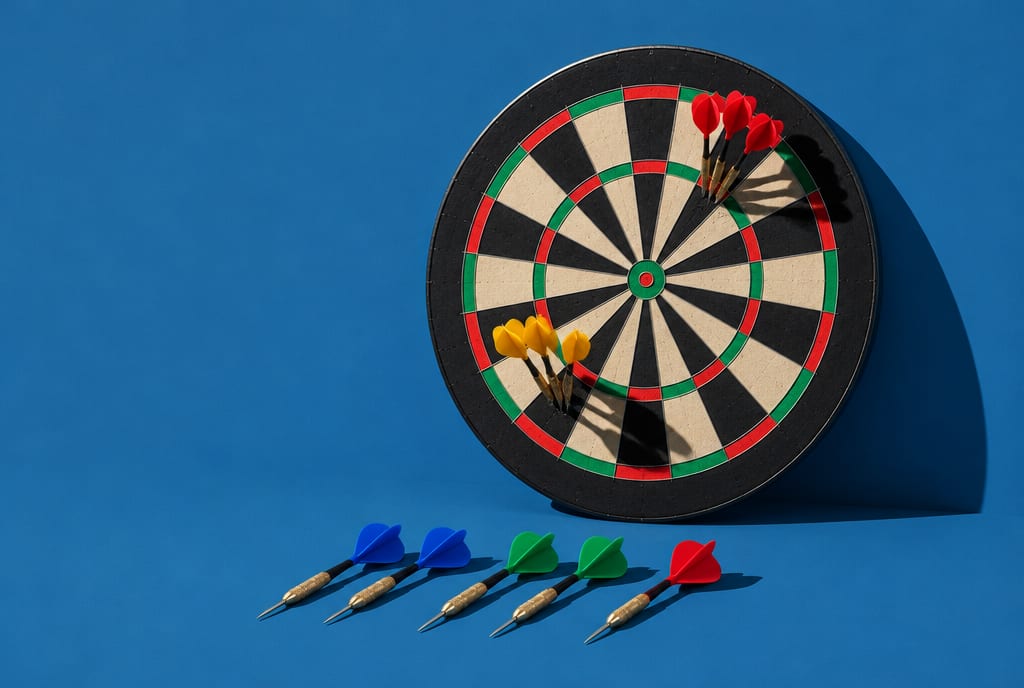
- The Ehrenberg-Bass 95:5 rule says about 5% of B2B buyers are in market at any time. Of 200 accounts, that is roughly ten.
- Tier the list, spend where activity is, and pay for it by cutting broad programmes, not by adding a new line.
The board wants account-based marketing. Finance wants acquisition cost to stay flat. You have a list of 200 accounts and a demand gen budget that was built for volume. The risk is running both at once and paying twice.
The promise is real enough to take seriously. Momentum ITSMA, with the ABM Leadership Alliance, surveyed 279 ABM heads and practitioners and published the results in March 2023. 72% said ABM delivers higher ROI than other types of marketing. ABM took 28% of the 2022 marketing budget, and 71% planned to spend more.
So why might ABM raise your acquisition cost?
Because most programmes are bolted on, not built in. The same study found only 17% of ABM programmes were fully embedded as a foundational pillar of go-to-market strategy. The other 83% sit at earlier stages. In our view, that is where cost creeps up: a programme that runs alongside the old demand engine, with its own tools and content, adds to the budget instead of replacing part of it.
Treat the 72% with care. It is self-reported ROI, from people whose job is ABM, on 2022 data, and the release does not say how ROI was measured. The 17% is the more useful number because it is the less flattering one.
ABM done on top of demand gen is not a strategy. It is a second budget.
How many of the 200 are buying right now?
Probably a handful. Professor John Dawes of the Ehrenberg-Bass Institute put it as a rule of thumb: only 5% of B2B buyers are in market to buy right now. Applied to 200 accounts, that is about ten. The rule is a heuristic rather than a measurement, and your category will differ. But it changes the shape of the plan.
If you spread equal spend across all 200, around 190 of them get sales-grade attention they cannot use yet. Dawes's point is that marketing works mostly on future buying situations: the brand that gets remembered is the brand that gets bought. So the 190 need cheap, steady presence. The ten need everything.
How do you structure the campaign?
1. Tier the list by evidence, not hope. Score each account on fit and on observed activity: site visits, people engaging, conversations already open. Put the active few in the top tier and review it monthly.
2. Give each tier a cost ceiling. The top tier gets tailored content and seller time. The middle tier gets industry-level messaging. The long tail gets the brand presence you already pay for. Write the ceilings down before the first campaign.
3. Fund it by subtraction. List the broad demand programmes whose leads came from outside the 200. Cut or shrink them by the amount the top tier costs. Acquisition cost stays flat only if the total does.
4. Measure accounts, not leads. Track how many target accounts move to an opportunity, and the cost per won account. If cost per won account rises for two quarters, the subtraction did not happen.
5. Automate the research, not the relationship. Account briefs for 200 companies are slow by hand. Use research tools to keep them current, and keep people on the conversations.
That last step is where our workflows help: our Fast Strategy Explorer runs deep-dive research and strategic analysis on any company, and our Competitive Intel workflow automates competitor monitoring.
ABM pays when it replaces something. Decide what it replaces before you spend a dollar on it.
Questions people ask
We need to transition our demand gen budget toward an account-based marketing approach targeting 200 key accounts without driving up our customer acquisition cost. How do we structure this campaign?
Tier the 200 accounts, spend most heavily only on the few showing buying activity, and fund it by cutting broad demand programmes rather than adding to them. Momentum ITSMA found 72% of ABM practitioners report higher ROI than other marketing, but only 17% of programmes are fully embedded. John Dawes's 95:5 rule suggests only about 5% of buyers are in market at any time, so evenly spread spend across all 200 wastes most of it.
Does account-based marketing deliver better ROI?
Its practitioners say so. In Momentum ITSMA's benchmark of 279 ABM heads and practitioners, published in March 2023, 72% said ABM delivers higher ROI than other types of marketing. The figure is self-reported by people who run ABM programmes.
How much of a B2B marketing budget goes to ABM?
In the same Momentum ITSMA study, 28% of 2022 marketing budgets were dedicated to ABM, and 71% of companies planned to increase ABM spend in 2023.
Sources
- Momentum ITSMA's annual ABM Benchmarking study shows no signs of slow down for Account-Based Marketing, PR Newswire (Momentum ITSMA), . 279 ABM heads and practitioners, with the ABM Leadership Alliance. Self-reported ROI, 2022 data, from people who run ABM.
- The 95:5 rule is the new 60:40 rule, Ehrenberg-Bass Institute (Marketing Week article). Heuristic from Professor John Dawes, not a measured rate. Page undated; listed as about five years old.
Agents with a job description, an owner and an off switch.
We build agentic workflows for research, content and production, with a human checkpoint designed in from the first day.
Keep reading
Your team's AI now comes with a daily allowance.
Agencies and Apple are rationing AI by the day. The interesting question is not the size of the cap but who decides when someone has earned a bigger one.
· 3 min read
Your customer sent an agent. The store turned it away.
Amazon, Yelp, United and Delta are turning consumer AI agents away. Four overlapping standards promise a way in, and none has published a transaction figure.
· 3 min read